Lab Guides
A Researcher’s Guide to Peptide Reconstitution Techniques
Research Disclaimer: This guide is for educational and laboratory research purposes only. Research peptides are sold strictly for laboratory use and are not intended for human consumption or therapeutic use.
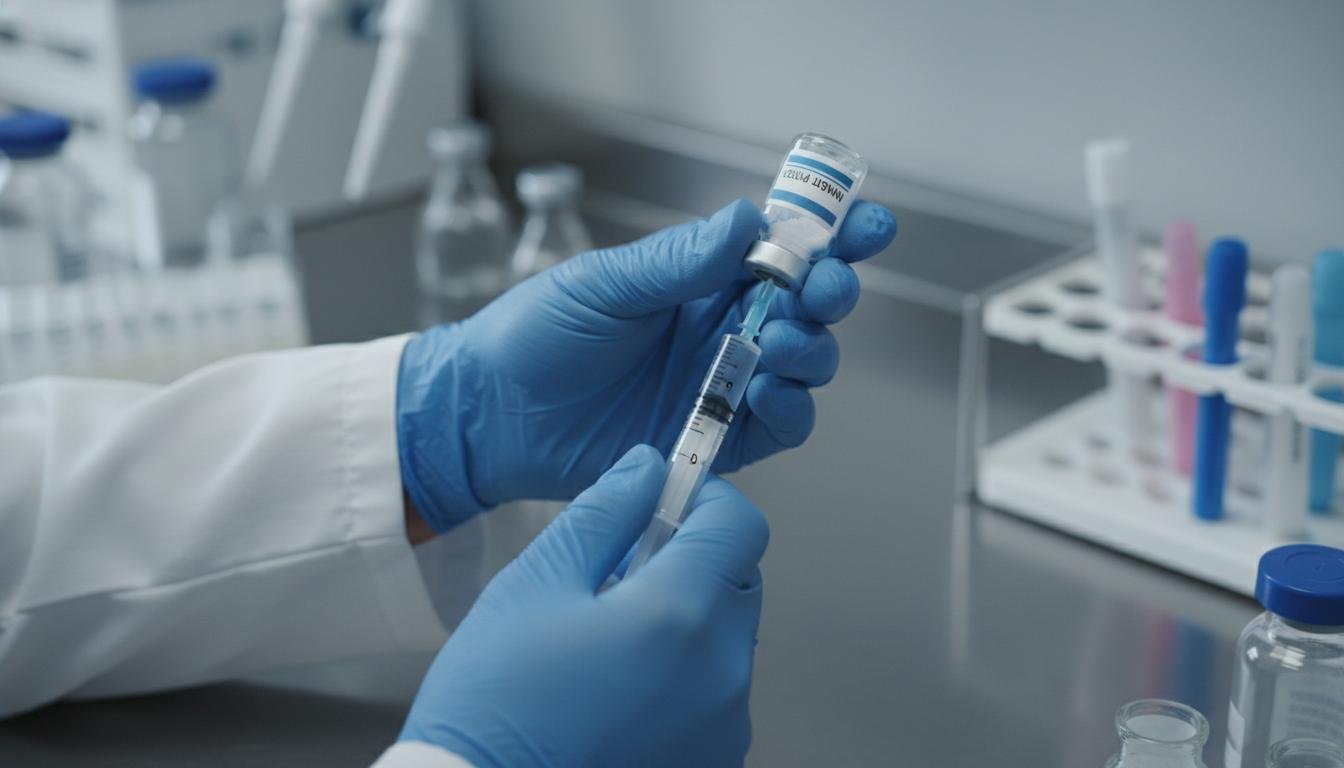
When your lyophilized research peptides for sale arrive from AREA 15 LABS, they require reconstitution before use in laboratory experiments. This critical process involves dissolving the freeze-dried peptide powder in an appropriate sterile diluent, typically bacteriostatic water. Proper reconstitution technique directly impacts peptide solubility, stability, and the validity of your research outcomes.
This step-by-step guide covers the complete reconstitution workflow used by professional research laboratories. Whether you are new to peptide research or seeking to refine your protocols, these techniques will help ensure consistent, reproducible results with every vial you reconstitute.
Materials Needed for Peptide Reconstitution
Before beginning, gather the following laboratory supplies:
- Lyophilized research peptide vial (from AREA 15 LABS or other verified research peptide supplier)
- Bacteriostatic water or appropriate sterile diluent
- Sterile syringes (typically 1mL insulin syringes with 25-28 gauge needles)
- Alcohol prep pads (70% isopropyl alcohol)
- Laboratory wipes or clean work surface
- Vial labels and permanent marker
- Laboratory notebook for documentation
Step-by-Step Reconstitution Protocol
Step 1: Preparation and Sterilization
Work in a clean environment. If available, use a laminar flow biosafety cabinet. Wipe all vial tops (both peptide and bacteriostatic water) with 70% isopropyl alcohol and allow to air dry for 30 seconds. This prevents contamination during needle insertion.
Step 2: Calculate Dilution Volume
Determine your desired final concentration using this formula: Volume (mL) = Peptide Mass (mg) / Desired Concentration (mg/mL). For example, a 10 mg vial reconstituted with 2 mL of bacteriostatic water yields a 5 mg/mL solution. Most research applications use concentrations between 1-10 mg/mL.
Step 3: Draw Diluent
Using a sterile syringe, draw the calculated volume of bacteriostatic water. Keep the needle sterile throughout this process. Do not touch the needle tip to any non-sterile surface.
Step 4: Add Diluent to Peptide Vial
Insert the needle through the peptide vial’s rubber septum. Inject the water slowly down the inside wall of the vial, not directly onto the lyophilized powder cake. Direct spraying can cause peptide aggregation and foaming. Allow the water to gently flow over the powder.
Step 5: Dissolution
Do not shake the vial. Allow it to sit undisturbed for 1-2 minutes. Then, gently swirl the vial in a circular motion until the powder fully dissolves. Some peptides dissolve instantly; others may require several minutes of gentle swirling. Patience prevents mechanical degradation.
Step 6: Visual Inspection
The reconstituted solution should be clear and particle-free. Slight cloudiness may indicate incomplete dissolution — continue gentle swirling. Persistent cloudiness, precipitation, or discoloration suggests solubility issues; document this in your laboratory notebook.
Step 7: Labeling and Storage
Label the vial clearly with: peptide name/sequence, concentration, date reconstituted, diluent used, and your initials. Store immediately following our peptide storage guidelines — typically refrigerated at 2-8°C for up to 4 weeks.
Advanced Reconstitution Considerations
Some research peptides present unique solubility challenges:
- Highly hydrophobic peptides: May require addition of a small amount of acetic acid or DMSO before adding bacteriostatic water. Consult the peptide data sheet.
- Long-chain peptides (>30 amino acids): Often dissolve more slowly. Gentle warming to 37°C in a water bath can accelerate dissolution without causing degradation.
- Cysteine-rich peptides: Prone to oxidation and disulfide bond formation. Include a reducing agent like DTT or TCEP if your protocol allows.
- Aggregation-prone sequences: May benefit from sequential addition of small water aliquots rather than the full volume at once.
Research published in Nature Methods recommends that laboratories develop and document standard operating procedures (SOPs) for peptide reconstitution to ensure consistency across experiments and operators.
Related Reading
Need Research Peptides and Reconstitution Supplies?
AREA 15 LABS supplies HPLC-tested, USA-made research peptides with verified Certificates of Analysis. Same-day dispatch from our Texas facility.
Looking for Lab-Verified Research Peptides?
AREA 15 LABS supplies HPLC-tested, USA-made research peptides with verified Certificates of Analysis. Same-day dispatch from our Texas facility.