Lab Guides
Lab Safety Essentials for Peptide Handling, Storage, and Disposal
Research Disclaimer: This safety guide is for educational purposes for qualified laboratory personnel. Research peptides are sold strictly for laboratory use and are not intended for human consumption, diagnostic use, or therapeutic applications. Always follow your institution's safety protocols and OSHA guidelines.
Working with research peptides requires the same rigorous safety standards as any laboratory procedure involving bioactive compounds. Whether you are handling lyophilized research peptides from AREA 15 LABS or reconstituted solutions, proper safety protocols protect you, your colleagues, and the integrity of your experimental data. This comprehensive guide covers essential safety practices for every stage of peptide handling in research settings.
The Occupational Safety and Health Administration (OSHA) requires that all laboratories implement hazard communication programs and provide appropriate personal protective equipment. Research peptides, while generally less hazardous than many chemical reagents, still require careful handling according to standard laboratory safety principles.
Personal Protective Equipment (PPE) for Peptide Research
At minimum, laboratory personnel handling research peptides should wear:
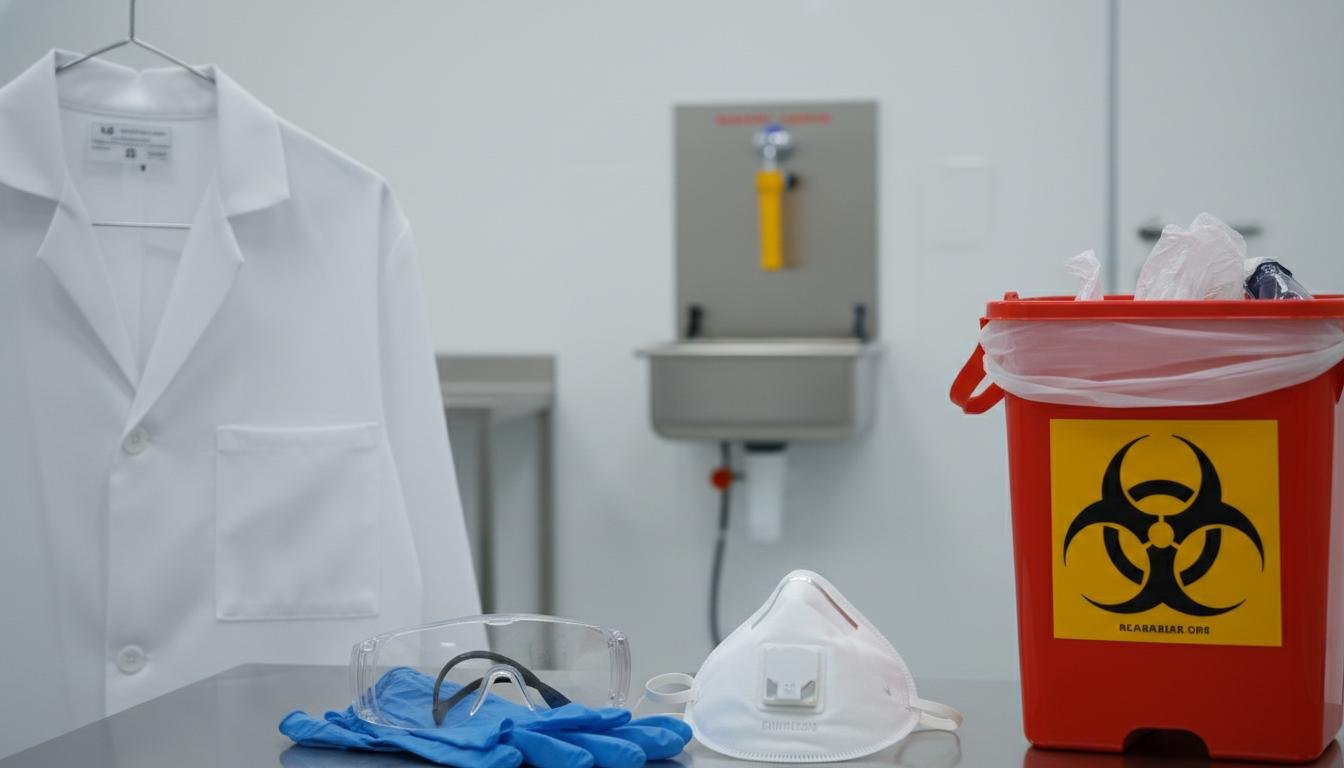
- Laboratory coat or gown: Provides barrier protection against spills and splashes. Use buttoned coats with long sleeves.
- Nitrile gloves: Replace immediately if torn or contaminated. Double-gloving is recommended when handling concentrated stock solutions.
- Safety goggles or face shield: Protects against aerosols and splashes during reconstitution or vial opening.
- Closed-toe shoes: Required in all laboratory environments; no sandals or open footwear.
The Centers for Disease Control and Prevention (CDC) Laboratory Safety Guidelines emphasize that PPE is the last line of defense after engineering controls and administrative procedures have been implemented.
Safe Handling Procedures for Research Peptides
Handling Lyophilized Peptides
Lyophilized peptide powders can become airborne during vial opening or weighing. Always:
- Open vials slowly to prevent powder dispersal from pressure changes
- Weigh peptides in a chemical fume hood or containment enclosure
- Use anti-static weighing paper or boats to prevent powder scatter
- Wear an N95 respirator when handling large quantities of dry powder
Reconstitution Safety
The reconstitution process presents several exposure risks:
- Use needle-safe devices and never recap used needles
- Dispose of sharps immediately in approved sharps containers
- Work over absorbent bench paper to contain spills
- Wash hands thoroughly after removing gloves
Spill Response
In case of peptide spill:
- Alert others in the area and restrict access
- Wear appropriate PPE (minimum: gloves, goggles, lab coat)
- Cover spill with absorbent material (paper towels)
- Gently wipe from outside toward center to avoid spreading
- Clean area with 70% ethanol or appropriate disinfectant
- Dispose of cleanup materials as biohazardous waste
- Document incident in laboratory safety log
Storage Safety Considerations
Safe storage practices prevent accidents and maintain product integrity:
- Store peptides in clearly labeled, sealed containers
- Use secondary containment (trays or bins) in freezers to contain leaks
- Segregate peptides from incompatible chemicals
- Maintain access logs for controlled research materials
- Include peptide storage locations in laboratory emergency plans
Waste Disposal for Peptide Research
Proper disposal is both a safety and environmental requirement:
| Waste Type | Disposal Method | Container |
|---|---|---|
| Unused peptide solutions | Chemical waste disposal | Red or yellow hazardous waste container |
| Sharps (needles, syringes) | Sharps container | Puncture-proof, labeled sharps bin |
| Contaminated PPE | Biohazard waste | Red biohazard bag or container |
| Empty vials | Sharps or chemical waste | Appropriate labeled container |
| Packaging materials | General recycling/trash | Regular waste if uncontaminated |
Always consult your institution’s Environmental Health and Safety (EHS) office and the Environmental Protection Agency (EPA) guidelines for hazardous waste disposal in your jurisdiction.
Emergency Preparedness
Every laboratory should have:
- Emergency eyewash station within 10 seconds’ travel distance
- Safety shower accessible and tested monthly
- Spill kit with absorbent materials, PPE, and disposal bags
- Posted emergency contact numbers ( Poison Control: 1-800-222-1222 )
- Fire extinguisher appropriate for chemical fires (Class B/C)
- First aid kit stocked and accessible
Related Reading
Need Research Peptides and Reconstitution Supplies?
AREA 15 LABS supplies HPLC-tested, USA-made research peptides with verified Certificates of Analysis. Same-day dispatch from our Texas facility.
Looking for Lab-Verified Research Peptides?
AREA 15 LABS supplies HPLC-tested, USA-made research peptides with verified Certificates of Analysis. Same-day dispatch from our Texas facility.