Lab Guides
How to Read and Interpret a Certificate of Analysis (COA) for Research Peptides
Research Disclaimer: This guide is for educational and research purposes only. Research peptides are sold strictly for laboratory use and are not intended for human consumption or therapeutic applications.
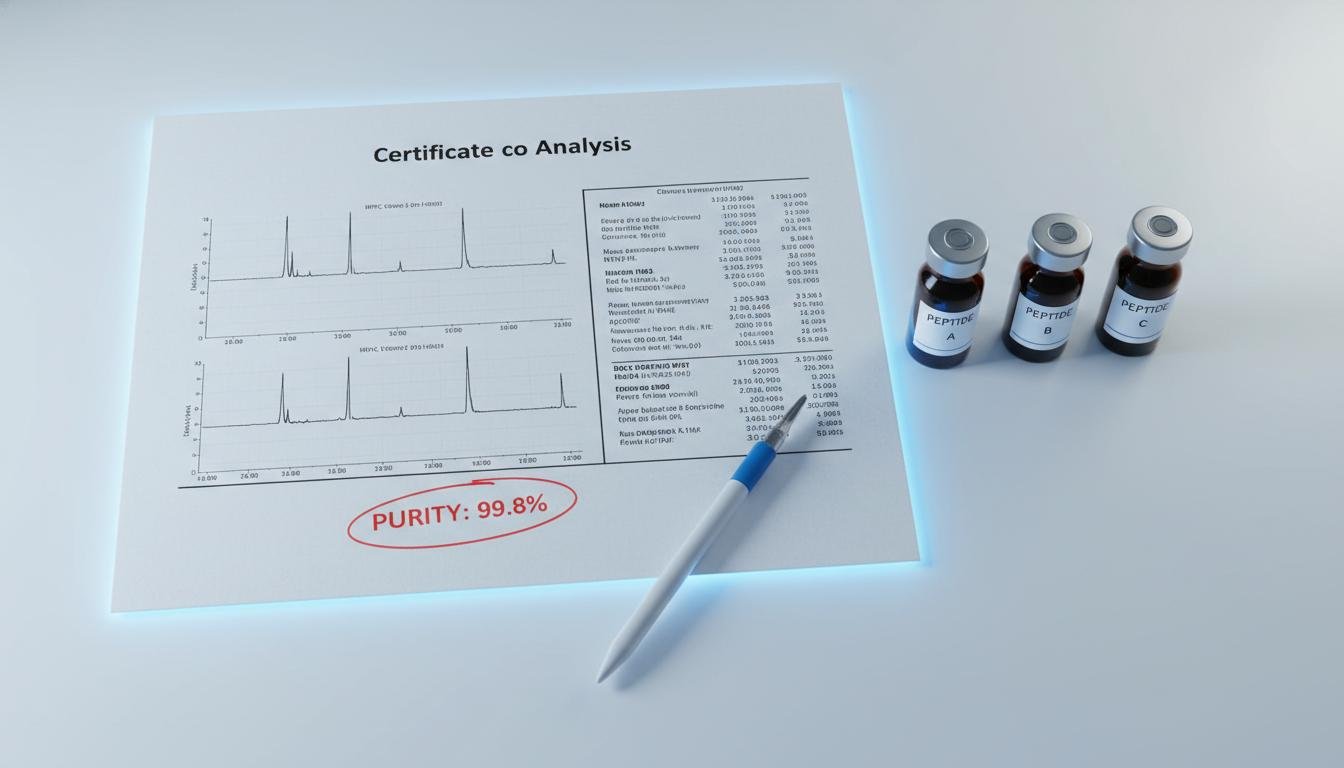
A Certificate of Analysis (COA) is the most important quality document accompanying any research peptides for sale from a reputable supplier. When you buy research peptides online, the COA provides objective, third-party verified data confirming that the product meets specified purity, identity, and quality standards. Understanding how to read a COA empowers researchers to evaluate suppliers, verify product integrity, and maintain laboratory compliance.
At AREA 15 LABS, every batch of laboratory-grade peptides we ship includes a comprehensive COA from an independent analytical laboratory. Our COAs are freely accessible through our online COA database. This guide explains each section of a typical research peptide COA and what the data means for your laboratory work.
What Is a Certificate of Analysis?
A COA is a formal document issued by a testing laboratory that certifies a product has been analyzed and meets specified quality criteria. For research peptides, COAs typically include identity confirmation, purity determination, and sometimes additional tests for endotoxins, residual solvents, or microbial contamination. The United States Pharmacopeia (USP) provides guidelines for COA documentation in pharmaceutical and research contexts.
Key Components of a Research Peptide COA
1. Product Identification
The top section of a COA identifies:
- Product name: The peptide name (e.g., BPC-157, CJC-1295, GHRP-6)
- Catalog number: The supplier’s internal reference code
- Lot/Batch number: Unique identifier for traceability
- Date of manufacture and testing: Freshness indicator
- Quantity: Amount supplied (typically in milligrams)
- Appearance: Physical description (white powder, clear solution, etc.)
2. HPLC Purity Analysis
The purity section is the most critical part of a peptide COA. It includes:
- Chromatogram: Visual graph showing all detected peaks with the main peptide peak identified
- Purity percentage: Area of main peak / total peak area × 100. AREA 15 LABS guarantees ≥99% on all research peptides.
- Column and method details: Specifies the HPLC column type (e.g., C18), mobile phase, flow rate, and gradient program
- Retention time: When the main peptide elutes from the column
Learn more about HPLC testing methods and how to read chromatograms in our dedicated guide.
3. Mass Spectrometry (MS) Data
MS confirms that the peptide has the correct molecular weight, verifying its identity:
- Expected molecular weight: Calculated from the amino acid sequence
- Observed molecular weight: Measured by mass spectrometer (should match expected within ±1 Da)
- Ionization method: ESI (electrospray) or MALDI-TOF
4. Additional Tests (When Applicable)
Premium research peptide suppliers may include:
- Amino Acid Analysis (AAA): Confirms amino acid composition ratios
- Endotoxin testing (LAL): Important for cell culture applications
- Residual solvent analysis: Verifies removal of synthesis solvents (TFA, acetonitrile)
- Microbial testing: Confirms sterility for sensitive applications
Red Flags: When to Question a COA
Not all COAs are created equal. Exercise caution if you encounter:
- No batch-specific data: Generic COAs that apply to “all batches” rather than a specific lot number
- Missing chromatograms: Purity claimed without supporting chromatographic data
- Old testing dates: COA date significantly older than manufacture date may indicate retesting or old inventory
- No third-party verification: COAs issued by the manufacturer rather than an independent lab
- Typos or inconsistencies: Professional COAs should be error-free with consistent data
The FDA and World Health Organization (WHO) emphasize the importance of independent third-party testing for quality-critical materials used in research and pharmaceutical applications.
Related Reading
Need Research Peptides and Reconstitution Supplies?
AREA 15 LABS supplies HPLC-tested, USA-made research peptides with verified Certificates of Analysis. Same-day dispatch from our Texas facility.
Looking for Lab-Verified Research Peptides?
AREA 15 LABS supplies HPLC-tested, USA-made research peptides with verified Certificates of Analysis. Same-day dispatch from our Texas facility.