Lab Guides
Growth Hormone Secretagogues: Research Trends and Applications for 2026
Research Disclaimer: This article discusses growth hormone secretagogue peptides for educational and laboratory research purposes only. These compounds are sold strictly for in vitro research and are not intended for human consumption, diagnostic use, or therapeutic applications.
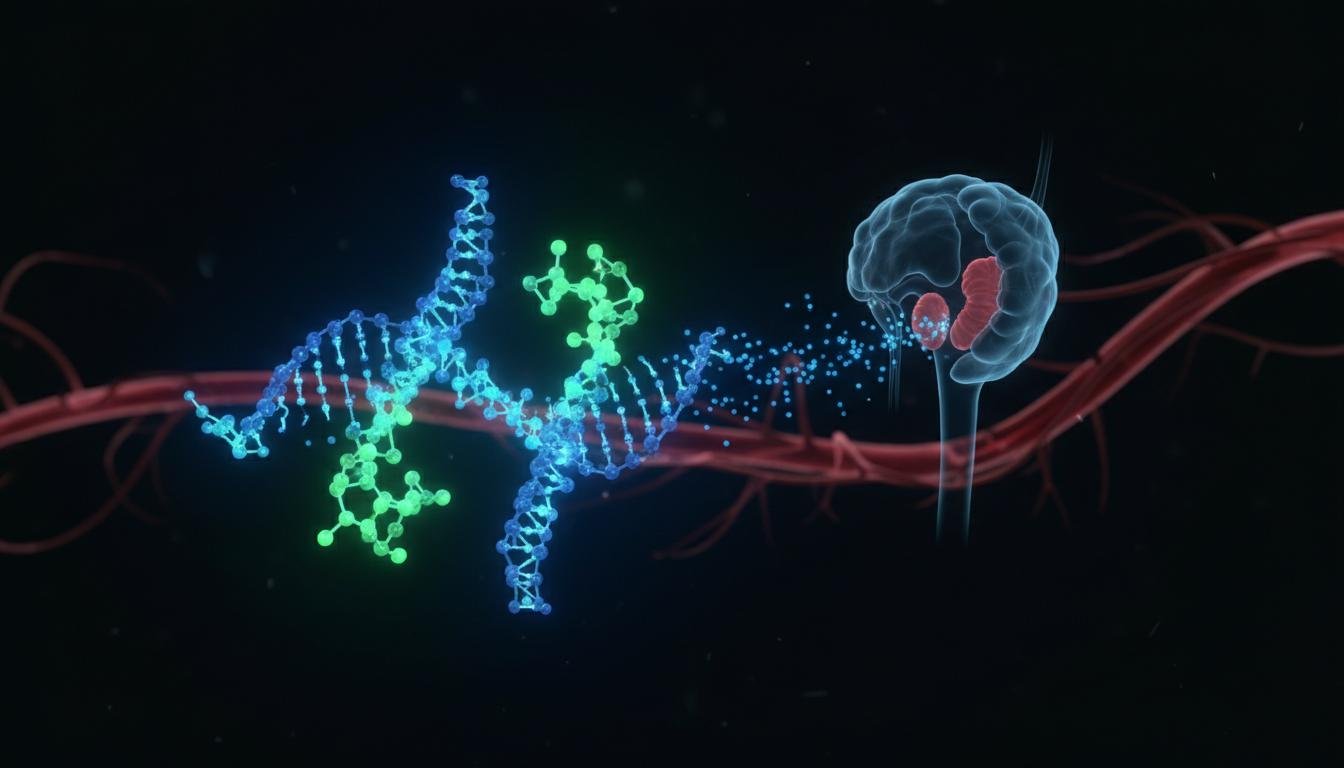
Growth hormone secretagogues (GHS) represent one of the most active and rapidly evolving areas of peptide research. These synthetic peptides function by interacting with the growth hormone secretagogue receptor (GHS-R1a) to stimulate the release of growth hormone from the pituitary gland. For biochemistry and endocrinology laboratories, GHS compounds offer valuable tools for studying GH signaling pathways, metabolic regulation, and cellular growth mechanisms.
At AREA 15 LABS, we supply several research-grade growth hormone peptides including CJC-1295, GHRP-6, and Ipamorelin to qualified research institutions. This article examines current research trends, key compounds in this category, and methodological considerations for laboratories working with GHS peptides in 2026.
The Science of Growth Hormone Secretion
Growth hormone (GH) secretion from the anterior pituitary is regulated by two primary hypothalamic hormones: growth hormone-releasing hormone (GHRH) and somatostatin (growth hormone-inhibiting hormone). GHS peptides represent a third class of regulators that act through the ghrelin receptor (GHS-R1a), a G-protein coupled receptor expressed predominantly in the pituitary and hypothalamus.
Research published in Endocrine Reviews established that GHS-R1a activation triggers intracellular calcium mobilization and cAMP accumulation, leading to GH secretion through a pathway distinct from GHRH. This mechanistic distinction makes GHS peptides valuable research tools for dissecting GH regulatory networks.
Key Growth Hormone Secretagogue Research Peptides
GHRP-6 (Growth Hormone Releasing Peptide-6)
GHRP-6 is a hexapeptide (His-D-Trp-Ala-Trp-D-Phe-Lys-NH2) and one of the earliest GHS compounds developed. Research applications include:
- Structure-activity relationship studies at GHS-R1a
- Comparative potency assays with other GHS peptides
- Receptor binding kinetics and pharmacological profiling
GHRP-6 has relatively high affinity for GHS-R1a but may also interact with other receptor systems at higher concentrations, making it useful for selectivity studies.
Ipamorelin
Ipamorelin is a pentapeptide (Aib-His-D-2-Nal-D-Phe-Lys-NH2) noted in research literature for its high selectivity for GHS-R1a. Studies in European Journal of Endocrinology characterized Ipamorelin as a selective GHS-R1a agonist with minimal off-target activity compared to earlier generation compounds.
CJC-1295 (Mod GRF 1-29)
CJC-1295 is a modified GHRH analog (Tyr-D-Ala-Asp-Ala-Ile-Phe-Thr-Gln-Ser-Tyr-Arg-Lys-Val-Leu-Ala-Gln-Leu-Ser-Ala-Arg-Lys-Leu-Leu-Gln-Asp-Ile-Met-Ser-Arg-NH2 with DAC) that extends the half-life of native GHRH. Research applications focus on its pharmacokinetic profile and comparative duration of action versus unmodified GHRH fragments.
Sermorelin and Tesamorelin
These GHRH analogs are also used in research settings. Sermorelin (GHRH 1-29) represents the biologically active fragment of endogenous GHRH, while Tesamorelin (EGRIFTA) is a stabilized variant with enhanced resistance to proteolytic degradation.
Research Trends in 2026
Current trends in GHS peptide research include:
- Receptor subtype studies: Investigating GHS-R1a splice variants and their differential responses to various GHS peptides
- Combinatorial approaches: Studying synergistic effects of GHS + GHRH combinations in in vitro pituitary cell models
- Structural biology: Cryo-EM and X-ray crystallography studies of GHS-R1a ligand binding domains
- Metabolic research: Exploring ghrelin/GHS-R1a signaling in adipose tissue and hepatic metabolism
- Peptide engineering: Developing next-generation GHS analogs with modified pharmacokinetic properties
| Peptide | Type | Receptor | MW (Da) |
|---|---|---|---|
| GHRP-6 | GHS agonist | GHS-R1a | 873.0 |
| Ipamorelin | Selective GHS | GHS-R1a | 711.9 |
| CJC-1295 (with DAC) | GHRH analog | GHRH receptor | ~3368 |
| Sermorelin | GHRH fragment | GHRH receptor | 3357.9 |
Related Reading
Need Research Peptides and Reconstitution Supplies?
AREA 15 LABS supplies HPLC-tested, USA-made research peptides with verified Certificates of Analysis. Same-day dispatch from our Texas facility.
Looking for Lab-Verified Research Peptides?
AREA 15 LABS supplies HPLC-tested, USA-made research peptides with verified Certificates of Analysis. Same-day dispatch from our Texas facility.