Lab Guides
Bacteriostatic Water for Peptide Reconstitution: A Complete Laboratory Guide
Research Disclaimer: This article is for educational and laboratory research purposes only. The compounds discussed are strictly for laboratory use and are not intended for human consumption, diagnostic use, or therapeutic applications. Always follow proper laboratory protocols and local regulations.
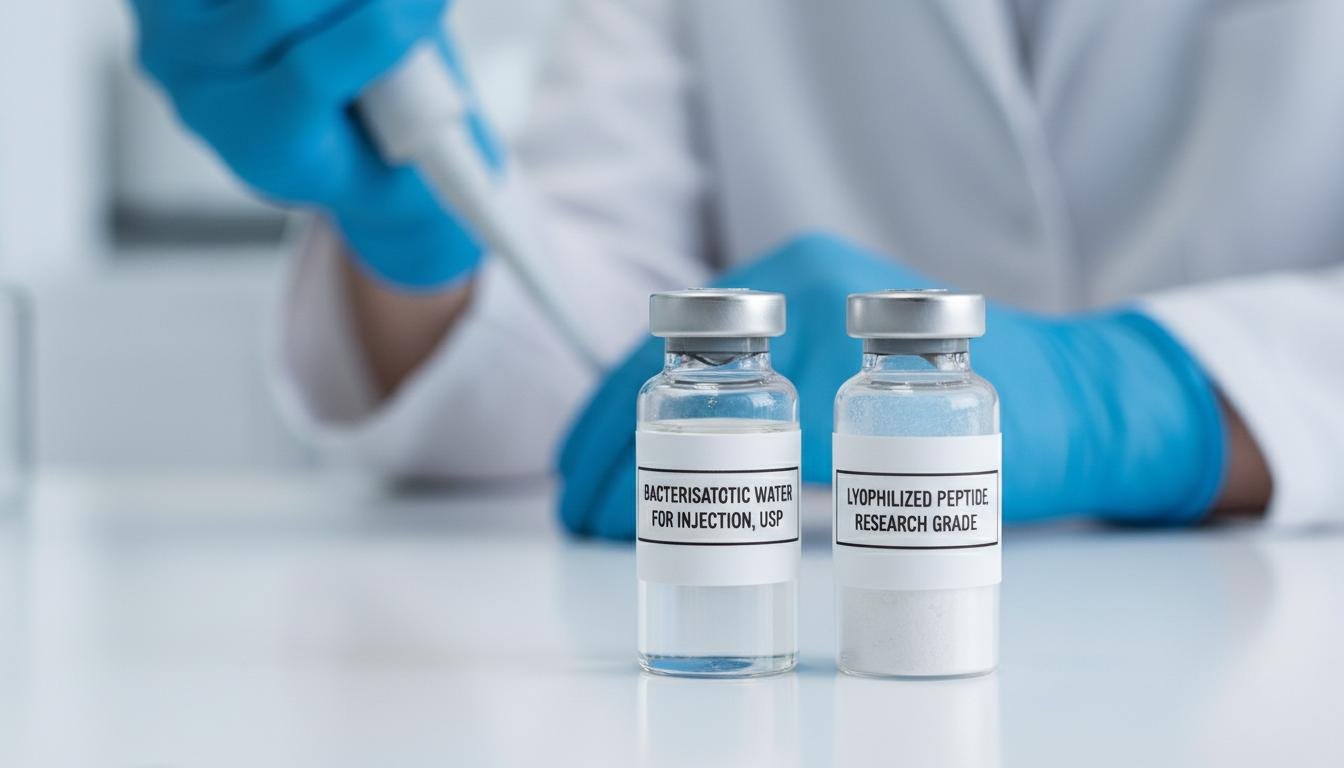
When you purchase lyophilized research peptides for sale from a USA peptide supplier like AREA 15 LABS, they arrive as freeze-dried powders that must be reconstituted before use in laboratory experiments. The most common and recommended diluent for this process is bacteriostatic water — a sterile, non-pyrogenic water preparation containing 0.9% benzyl alcohol that inhibits bacterial growth.
Understanding the proper use of bacteriostatic water for peptide reconstitution is essential for any laboratory working with research-grade peptides. Incorrect reconstitution techniques can compromise peptide integrity, introduce contamination, and invalidate your research findings. This guide covers everything researchers need to know about selecting and using bacteriostatic water for peptide reconstitution.
What Is Bacteriostatic Water?
Bacteriostatic water (also labeled as Bacteriostatic Water for Injection, USP) is sterile water containing 0.9% (9 mg/mL) benzyl alcohol as a bacteriostatic preservative. The benzyl alcohol prevents the growth of bacteria and fungi, making it ideal for multi-dose applications in laboratory settings. According to the United States Pharmacopeia (USP), bacteriostatic water meets stringent purity standards required for pharmaceutical and research applications.
It is important to distinguish bacteriostatic water from other water types used in laboratories:
- Sterile water for injection: Contains no preservatives; suitable for single-use applications only as it lacks bacterial growth inhibition.
- Sodium chloride 0.9% (normal saline): Contains salt which can affect peptide solubility and isotonicity in certain assays.
- Deionized or distilled water: Not sterile; should never be used for peptide reconstitution as it may contain pyrogens and contaminants.
Why Bacteriostatic Water Is Preferred for Research Peptides
Laboratories worldwide prefer bacteriostatic water for peptide reconstitution for several critical reasons:
1. Multi-Dose Stability
Unlike sterile water, bacteriostatic water allows reconstituted peptides to be stored for extended periods without bacterial contamination. This is particularly valuable for laboratories conducting longitudinal studies where the same peptide solution is accessed repeatedly over weeks.
2. pH Neutral
Bacteriostatic water typically has a pH of 4.5-7.0, which is compatible with most research peptides. Peptide solubility and stability are highly pH-dependent, and the neutral pH of bacteriostatic water helps maintain peptide conformation. A study published in Nature Protocols found that pH deviations outside the 4-8 range significantly increased peptide aggregation rates.
3. Widespread Availability
Bacteriostatic water is readily available from laboratory supply companies, compounding pharmacies, and medical suppliers. When you buy research peptides online from AREA 15 LABS, we can also supply bacteriostatic water to ensure you have everything needed for proper reconstitution.
Step-by-Step Peptide Reconstitution Protocol
Follow this laboratory protocol for reconstituting lyophilized research peptides with bacteriostatic water:
- Calculate the required volume — Determine your desired concentration (typically 1-10 mg/mL for research applications). For example, to achieve 5 mg/mL with a 10 mg vial, use 2 mL of bacteriostatic water.
- Sterilize the work area — Use a laminar flow hood or clean, disinfected surface. Wipe vial tops with 70% isopropyl alcohol and allow to dry.
- Draw bacteriostatic water — Using a sterile syringe, draw the calculated volume of bacteriostatic water.
- Inject slowly — Insert the needle through the vial septum and slowly inject the water down the inside wall of the vial. Do not spray directly onto the lyophilized cake.
- Allow dissolution — Let the vial sit undisturbed for 1-2 minutes, then gently swirl. Never shake vigorously as this can cause peptide denaturation.
- Verify complete dissolution — The solution should be clear. If particles remain, allow additional time. Do not use if cloudiness persists.
- Label and store — Label with peptide name, concentration, date reconstituted, and your initials. Store per peptide storage guidelines.
Common Reconstitution Mistakes to Avoid
Even experienced researchers make errors during peptide reconstitution. Avoid these common mistakes:
- Using tap water or non-sterile water — Always use bacteriostatic water or another USP-grade sterile diluent.
- Rapid injection — Forceful water streams can cause peptide foaming and oxidation at the air-water interface.
- Vigorous shaking — Mechanical agitation can denature peptides and promote aggregation.
- Incorrect concentration calculation — Double-check your math. Too high concentrations can cause solubility issues.
- Storage at room temperature — Reconstituted peptides must be refrigerated or frozen immediately.
Related Reading
Need Research Peptides and Reconstitution Supplies?
AREA 15 LABS supplies HPLC-tested, USA-made research peptides with verified Certificates of Analysis. Same-day dispatch from our Texas facility.
Looking for Lab-Verified Research Peptides?
AREA 15 LABS supplies HPLC-tested, USA-made research peptides with verified Certificates of Analysis. Same-day dispatch from our Texas facility.